HMI DESIGN · ASTON MARTIN
VALENCE
A next-generation HMI concept — where performance, emotion, and seamless interaction converge.
PROJECT OVERVIEW
Refining the
driver's experience
A next-generation HMI concept for Aston Martin, designed to elevate the in-car experience through intuitive mode control, real-time feedback, and immersive environmental visuals. Built with a future-forward mindset, the system blends performance, emotion, and seamless interaction.
ROLE
Visual Design
UI/UX Design
Research
Prototyping
TIMELINE
Jan 2025
—
May 2025
BACKGROUND
Case Study
Team Project
Team Leader
START
View full project
Valence
A next-generation HMI concept for Aston Martin, designed to elevate the in-car experience through intuitive mode control, real-time feedback, and immersive environmental visuals. Built with a future-forward mindset, the system blends performance, emotion, and seamless interaction.
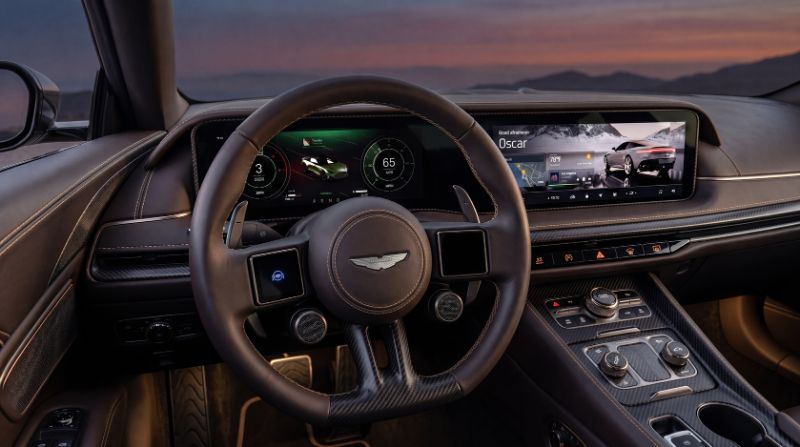
This project aims to reimagine the user experience of Aston Martin, blending the marque's heritage of refined British craftsmanship with the evolving expectations of a 2035 driver through a next-generation HMI system.
New HMI for Aston Martin
Three modes, one cluster.
The dashboard is one of the most frequently used interfaces while driving, so we enhanced the interface and added more features — including the display of different information when switching between the 3 modes.
The dashboard adapts seamlessly to different driving scenarios. Users can switch between GT Mode, Sport Mode, and Track Mode, with each mode offering a uniquely tailored interface that matches the needs of the moment.
In GT Mode, the dashboard is designed to prioritize a comfortable, intuitive driving experience for daily use.
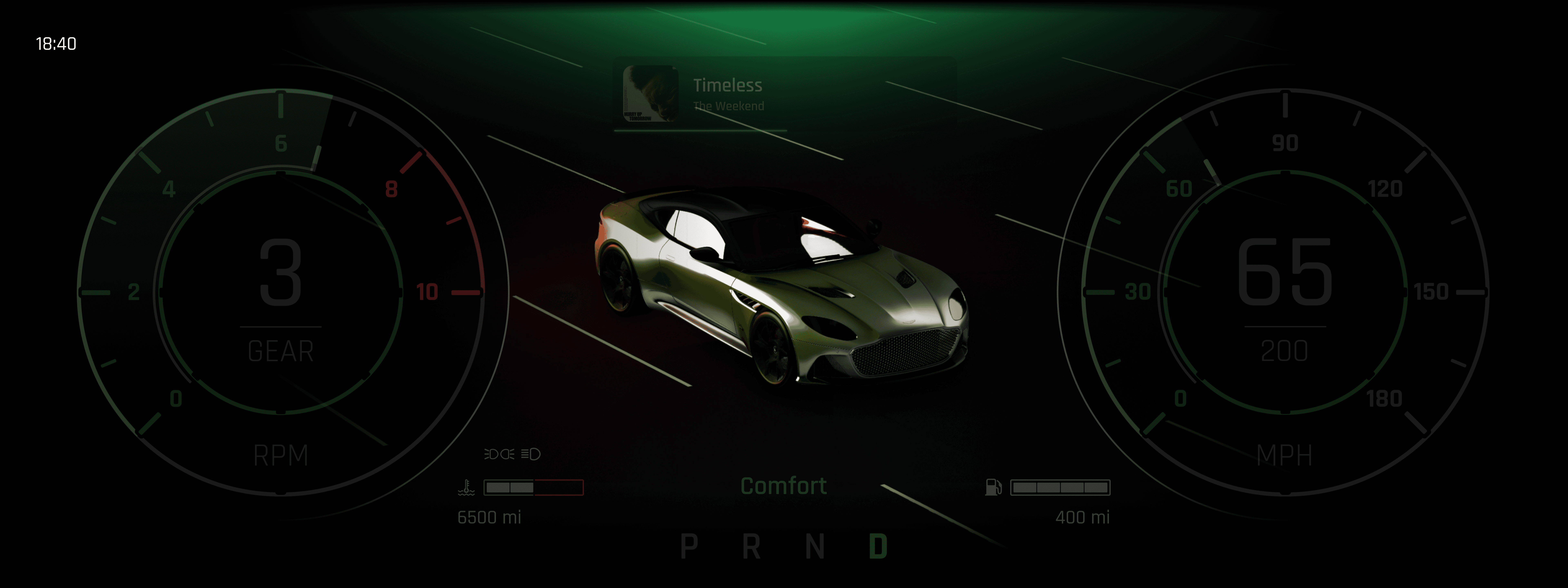
Real-Time 3D Preview
The center of the dashboard is a real-time 3D model of the vehicle, reflecting the car's status and driving behavior. Road detection and assistance functions are also available.
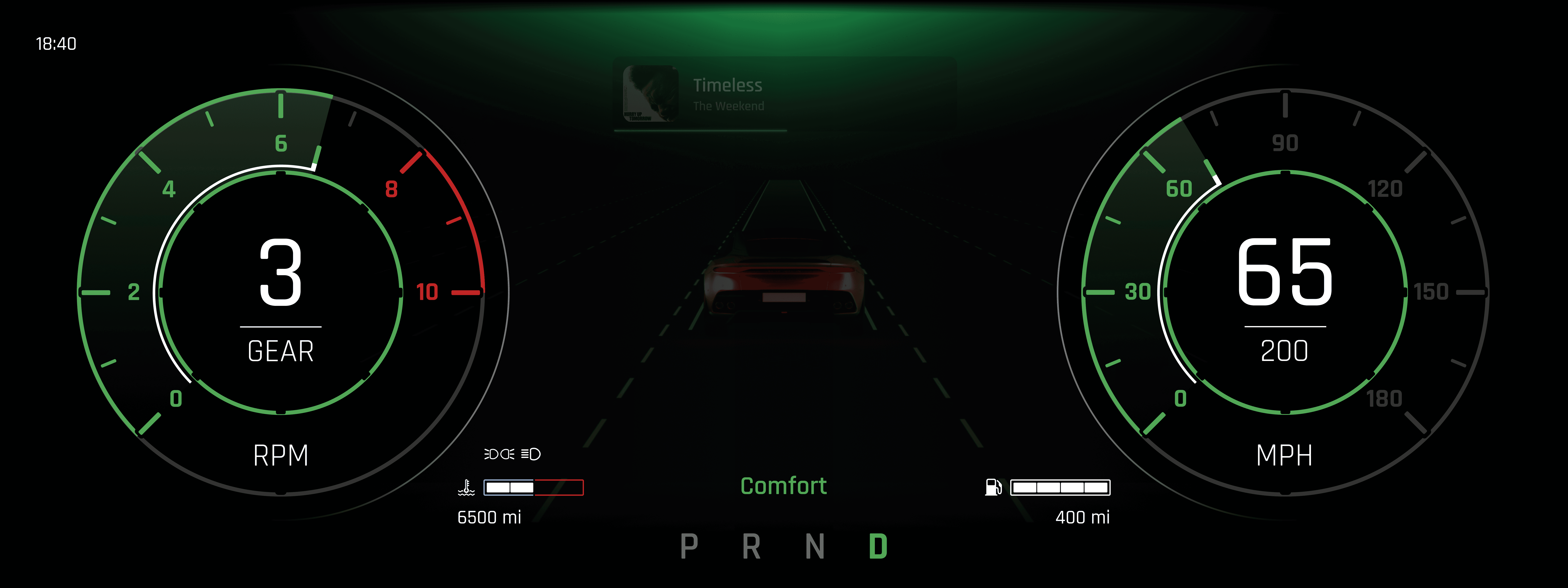
Driving Information Layout
Core performance data such as RPM, speed, and gear are displayed clearly on both sides of the screen — structured for glanceable, real-time understanding while maintaining a clean visual hierarchy.
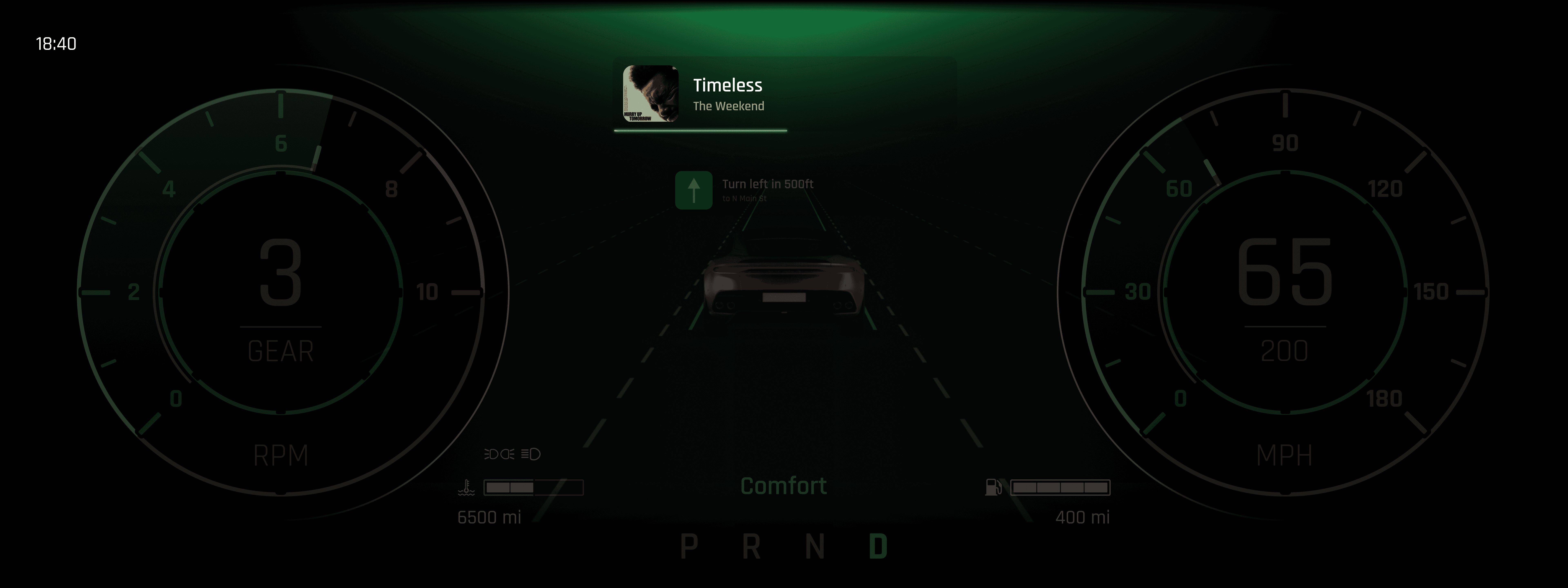
Integrated Media & Navigation Widget
A dedicated widget at the top shows current music playback. When navigation is active, it automatically switches to turn-by-turn prompts, ensuring essential guidance without distraction.
Information, control, and experience in one place.
The Central Display serves as the main hub of communication between driver and vehicle. Designed to be intuitive and immersive, it allows users to control key functions, access driving modes, and receive feedback from the car in real time.
From navigation to performance settings, the Central UI is where information, control, and experience come together — bringing Aston Martin's luxury and intelligence to the driver's fingertips.
Track Mode Interface
Prompts seat adjustment on entry, then displays lap times, track map, and car data during driving. After the race, it shows best lap, ranking, and suggestions for improvement.
Mode Sync Display
When the user rotates the mode selector on the steering wheel, the central UI responds with visual transitions — clearly reflecting the selected mode (GT, Sport, or Track) for better feedback.
Intuitive Navigation
Users can tap the map widget on the home screen to enter navigation mode. Turn-by-turn directions and media info appear as floating components on the interface.
Dynamic Environment
The UI environment, built in UE5, shifts with time of day and location, showing different scenes like a villa or city. Camera angles also change based on the car's status for an immersive experience.
Luxury and performance in the driver's hands.
This custom-designed steering wheel, 3D printed as a physical prototype, bridges the elegance of grand touring with the raw precision of track driving. It is the driver's primary point of contact — both physically and interactively — with the vehicle's digital system.
A 3D-printed steering wheel that blends luxury and performance — designed for both long-distance comfort and precise control on the track, while enabling direct interaction with the car's digital systems.
Engine Start
Users start the vehicle by clicking a button in the lower right corner of the steering wheel; we tightened the location of this button inward to prevent accidental contact.
Mode Switch
Users switch vehicle modes by rotating the knob in the lower left corner, which has an RGB halo to help users better determine which mode they are in.
Multimedia Key
We embedded touch-sensitive screens on both sides of the steering wheel. With the icon above, the user can directly interact with the dashboard and the center display.
Track Multimedia Key
In TRACK mode, the two touch-sensitive screens change to three big icons — one adjusts steering wheel effort and one switches the head-up display on and off.
Where current HMIs fall short
Drive mode transitions lack UX clarity and feedback
Inconsistent ergonomics between GT and Track modes
Limited personalization for driver profiles and behaviors
Visual overload in cluster during high-performance scenarios
Interviews, personas, journey maps
To better customize our designs, we interviewed a number of Aston Martin owners. We also created personas and subsequent user journey maps.

Drive mode transitions lack UX clarity and feedback
Inconsistent ergonomics between GT and Track modes
Limited personalization for driver profiles and behaviors
Visual overload in cluster during high-performance scenarios


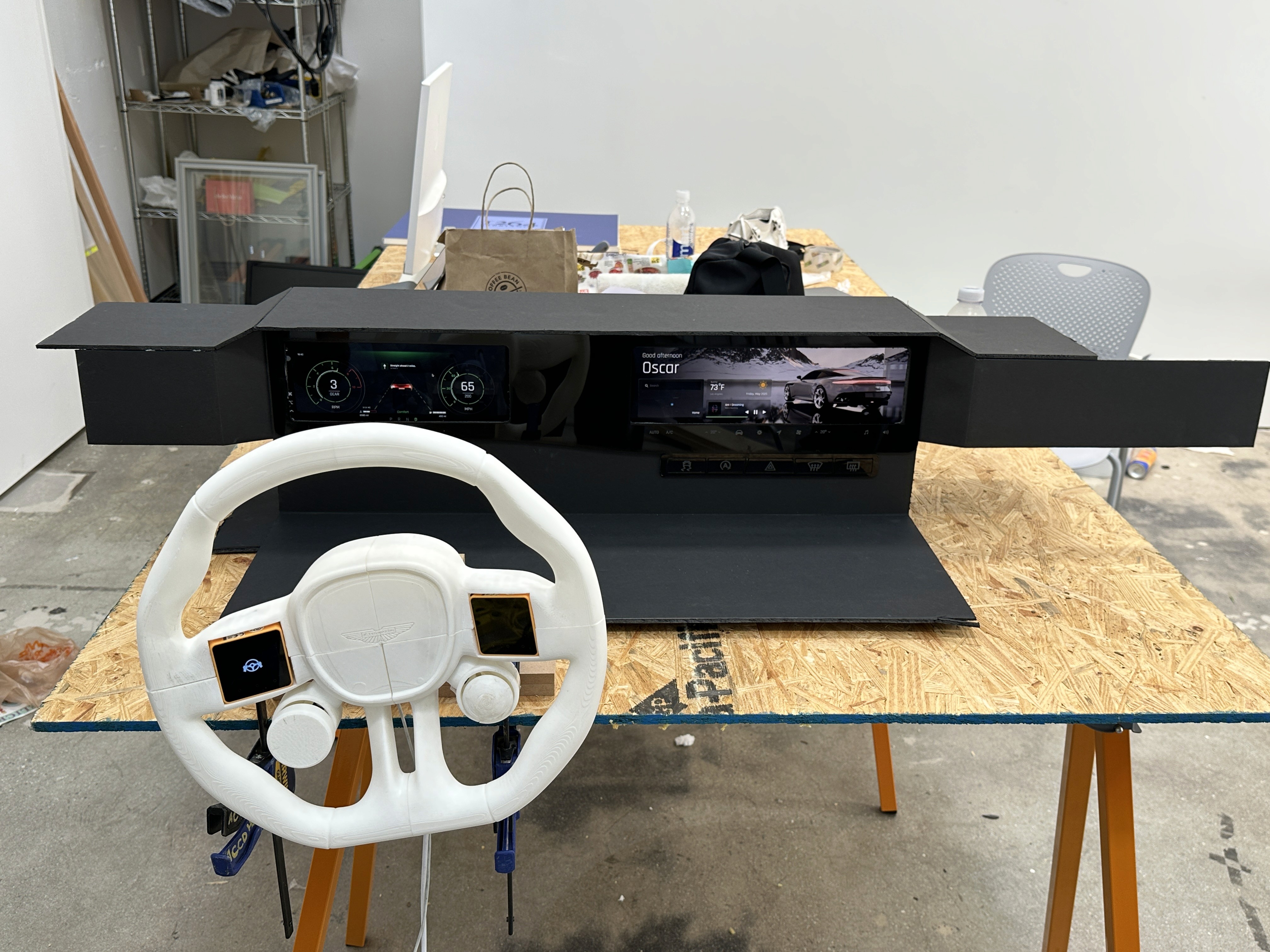
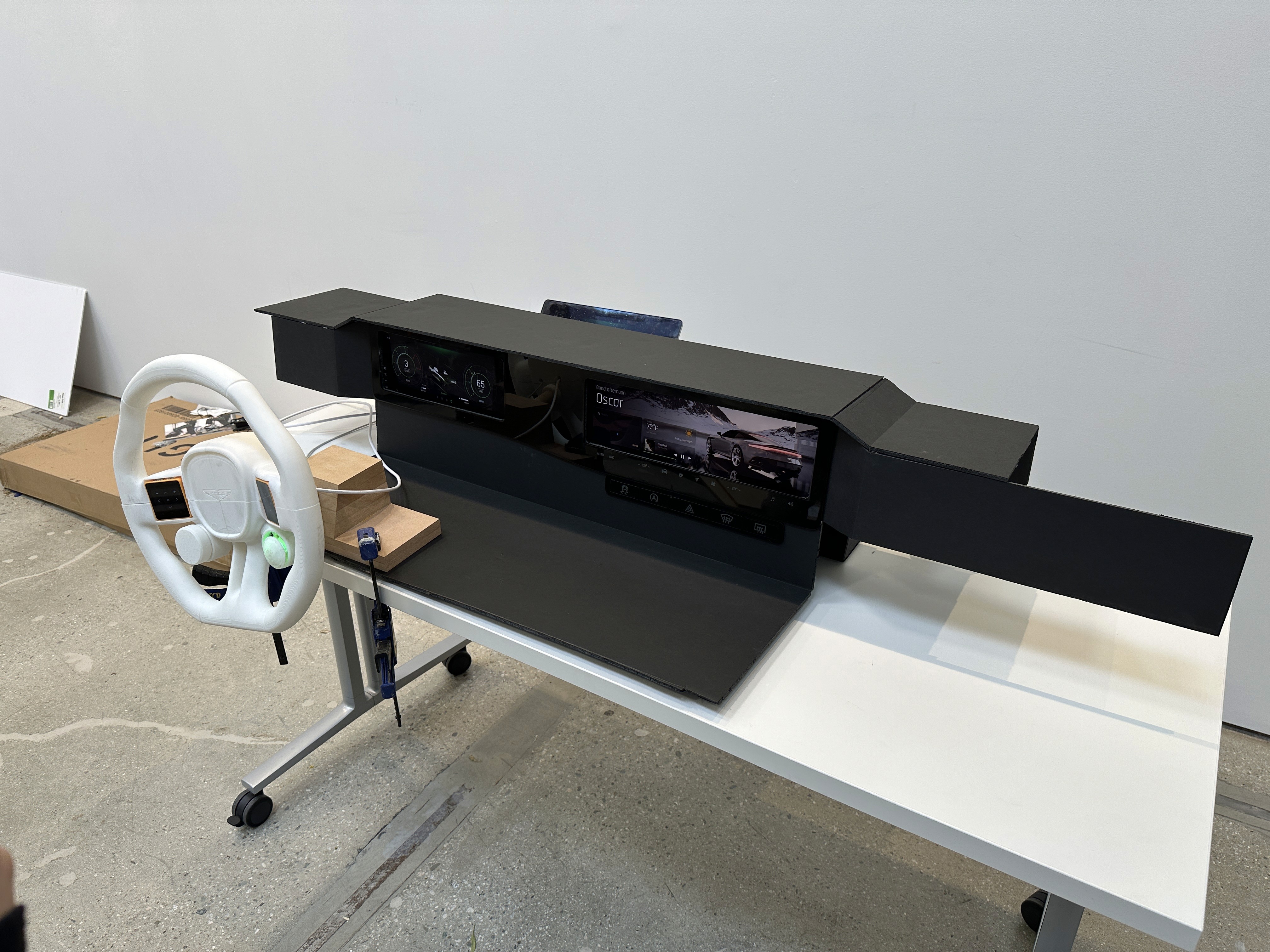
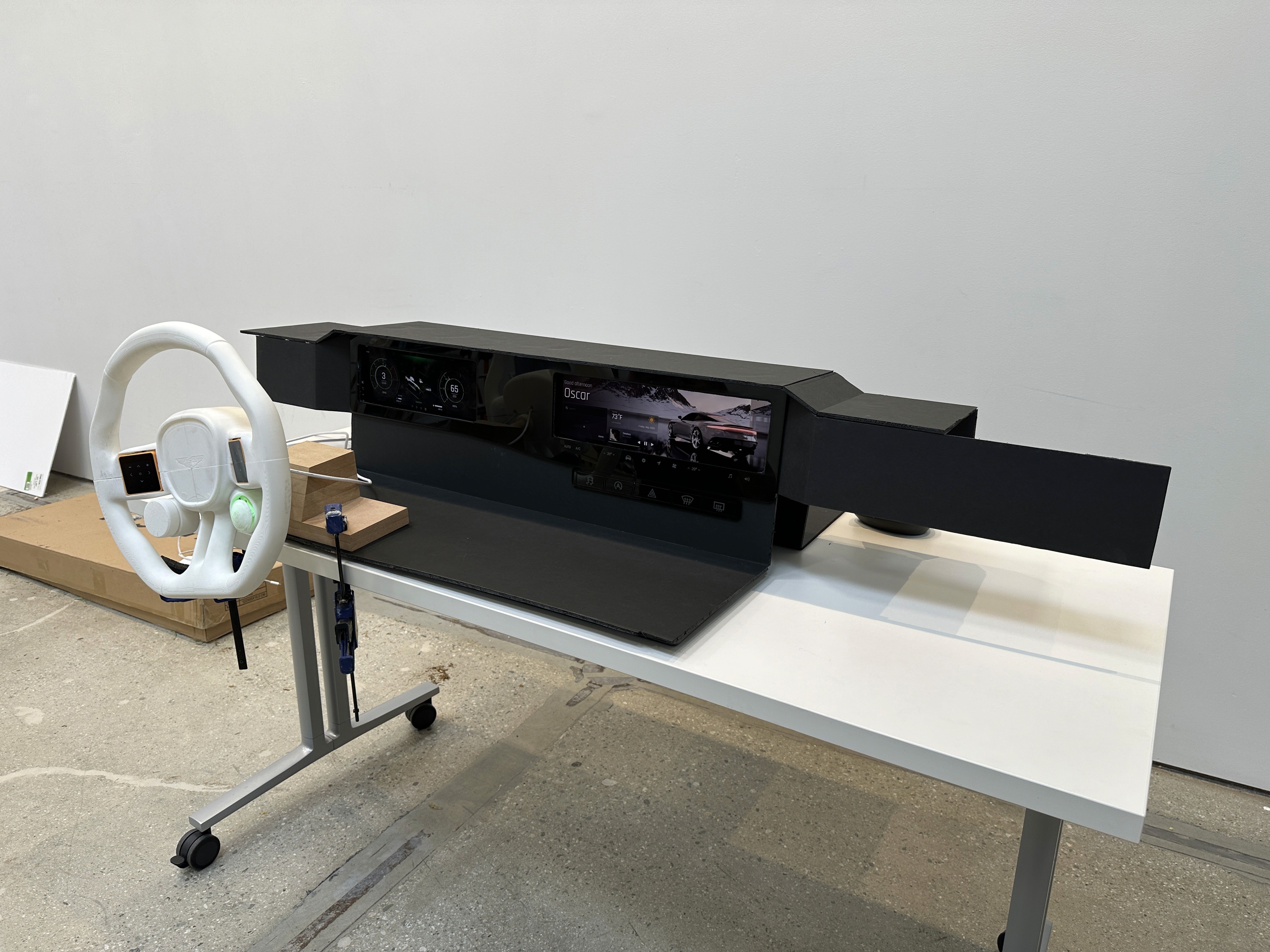
A full in-car rig.
The final prototype integrates the physical steering wheel, digital dashboard, and central UI into a cohesive setup — housed within a custom-built interior rig that simulates the in-car environment.